
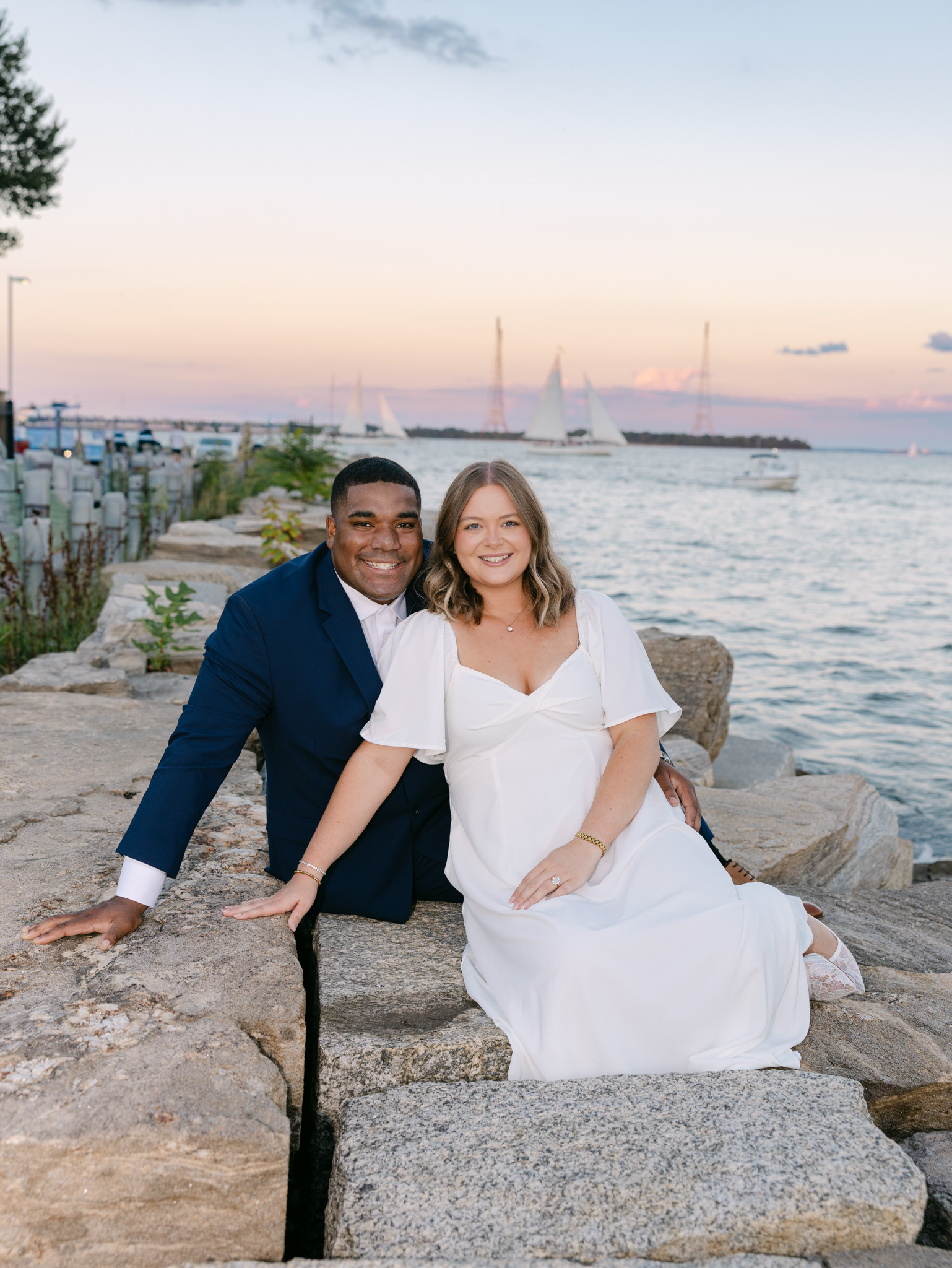
Three thoughtful courtesies to know before working with a professional photographer.
There was a time when having one’s portrait made was considered a rather significant occasion.
Families commissioned painters to preserve their likenesses for generations. Subjects dressed with intention, carefully selected their surroundings, and entrusted an artist with the extraordinary responsibility of documenting a moment in their lives.
It was an experience rooted in artistry, collaboration, and mutual respect.
Today, nearly everyone carries a camera in their pocket. Photography has become so wonderfully accessible that, somewhere along the way, we’ve begun to overlook the distinction between taking a photograph and commissioning a portrait.
And there is, indeed, a distinction.
A thoughtfully commissioned portrait is still a luxury. It is an investment in artistry, expertise, and the preservation of something deeply personal. The tools may have changed, but the significance of the experience has not.
As a professional photographer who regularly mentors emerging artists, I’ve had countless conversations about the little misunderstandings that can arise between photographers and their clients.
Most are entirely innocent. Photography has its own customs and professional courtesies, and unless you’ve worked closely with an artist, there’s really no reason you would know them.
From your very first inquiry to the moment you receive your finished portraits, there are a few small courtesies that can make the experience all the more enjoyable.
So, in the spirit of making the experience more enjoyable for everyone, I thought I’d share three commonly overlooked points of portrait etiquette, along with a few gracious alternatives.
1. Negotiating a Photographer’s Rates
There is a difference between discussing a budget and negotiating the value of someone’s work.
And understanding that distinction is one of the most useful courtesies when commissioning any creative professional.
We wouldn’t ordinarily visit a fine restaurant and negotiate the price of dinner, nor would we expect a tailor to reduce the cost of a bespoke garment simply because another establishment offers something less expensive.
Professional photography deserves much the same consideration.
Of course, photography is available at an enormous range of price points, and that is a wonderful thing. Different artists serve different needs, and every client deserves the opportunity to find someone whose work and pricing feel appropriate for them.
But the price of a portrait session often represents far more than the hour spent holding a camera.
Behind a beautifully executed portrait may be years of experience in composition, lighting, color, and post-production. There is also the less visible work: wardrobe guidance, location selection, scheduling around the light, navigating venue restrictions and permits, preparing clients for their session, and delivering a polished final collection.
These are the details that can transform a simple appointment into an effortless, memorable experience.
One of the conversations I have most frequently with photographers I mentor concerns the distinction between premium pricing and luxury service.
A premium price alone does not create a luxury experience. Nor does a modest price diminish an artist’s talent or professionalism.
True luxury is found in the thoughtfulness of the entire experience, from the first correspondence to the final photograph.
Every artist has the right to establish prices that reflect their business, expertise, and the experience they wish to provide. And every client has the right to decide whether that offering aligns with their priorities.
Neither decision requires justification.
The gracious alternative
If a photographer’s pricing falls outside your budget, there’s absolutely no embarrassment in saying so.
You might respond:
“Thank you so much for taking the time to share your collections. I truly admire your work, but the investment is a little beyond what we’ve planned for at the moment. Do you happen to offer smaller collections, installment options, or recommendations for other photographers whose services might be a better fit?”
This leaves room for a thoughtful conversation without asking the artist to discount their work.
Some photographers offer payment plans, shorter sessions, or seasonal opportunities. Others are more than happy to recommend a trusted colleague.
And sometimes, the most gracious decision is simply to wait until the experience you truly want fits comfortably within your plans.
After all, a luxury is meant to be enjoyed, not financially strained over.
2. Leaving an Inquiry Without a Response
Of all the etiquette questions I hear from fellow photographers, this may be the most easily overlooked.
You inquire with a photographer, exchange a few lovely emails, perhaps enjoy a consultation, and receive a thoughtfully prepared proposal.
Then life happens.
You become busy, your plans change, or you decide to move forward with someone else. And because delivering disappointing news can feel awkward, you simply don’t respond.
It’s understandable, and most of us have probably been on one side of this exchange at some point.
But a brief, courteous reply is one of the kindest things you can offer a small business owner.
When a photographer prepares for a consultation, they often spend time reviewing your vision, considering locations, checking availability, and creating recommendations specifically for you.
They may also be managing several inquiries for the same date.
While an inquiry doesn’t necessarily reserve that date, knowing when a prospective client has decided not to proceed allows the photographer to close the conversation gracefully and focus their attention elsewhere.
There is no obligation to book someone simply because they’ve invested time in getting to know you.
There is, however, a lovely opportunity to acknowledge that time.
The gracious alternative
Once you’ve made your decision, a simple note is all that’s necessary.
“Thank you again for your time and for putting together such a thoughtful proposal. We’ve decided to go in a different direction, but we sincerely appreciate your guidance and wish you all the best!”
That’s it. No elaborate explanation, no uncomfortable conversation, and certainly no apology necessary.
If possible, sending that note within a day or two of making your decision is a considerate practice.
It takes less than a minute and leaves everyone feeling respected.
3. Asking for the RAW Files
This is perhaps one of the most common misunderstandings in professional photography, and an entirely understandable one.
You love your portraits, you enjoy editing photographs yourself, and you imagine that requesting the original files might even save your photographer a little work.
A thoughtful intention, certainly! But there is something important to understand about the artistic process.
A RAW photograph is not simply an unedited version of the finished image. It is the original digital capture, containing an extraordinary amount of information that the photographer uses to develop the final portrait.
Much like a painter’s preliminary sketch or an unfinished canvas, it represents one stage of a larger creative process.
Professional photographers develop their work through careful consideration of color, exposure, contrast, skin tones, and countless other details. The finished photograph is the culmination of those decisions.
And while many consumer editing applications support RAW files, mobile presets are not necessarily designed for the same workflow as professional desktop editing tools. Applying a favorite filter to an original file is unlikely to reproduce the photographer’s intended result.
For many artists, delivering RAW files would be rather like a painter handing over an unfinished canvas and inviting someone else to complete it.
The gracious alternative
If you love your gallery and wish you had a few additional photographs, simply ask!
You might say:
“We absolutely adore our portraits! I was wondering whether there might be any additional images available for purchase or editing. We’d be delighted to explore that option if it’s something you offer.”
It’s a lovely way to express your enthusiasm while respecting the artist’s creative process.
Every photographer has a different policy regarding additional images, but asking about finished photographs rather than original working files is generally the more appropriate place to begin.
A Final Thought on the Art of Being a Client
One of my favorite things about photography is that, despite all the technological changes of the last century, the heart of the experience remains remarkably unchanged.
Someone entrusts an artist with the responsibility of preserving a part of their life.
That is a beautiful thing.
And while the modern world has made photography more convenient, more accessible, and more immediate, I don’t believe those advancements should make the experience any less meaningful.
Commissioning a portrait should feel special. It should be a moment to slow down, dress beautifully, enjoy the process, and allow someone who has dedicated themselves to their craft to create something lasting.
For photographers, that means providing an experience worthy of the trust and investment our clients place in us.
For clients, it means approaching the relationship with curiosity, clear communication, and an appreciation for the work that happens beyond the camera.
And for everyone, it means remembering that etiquette is not about perfection.
It’s about consideration.
The loveliest professional relationships, like the loveliest portraits, are created with a little intention and a great deal of care.
With love,
Victoria Hileman
Victoria Hileman Photo


